Field trip to Sicily 2023 – days one and two

Our level 5 Geography BSc(Hons) and Environmental Sciences BSc(Hons) students visited Sicily on a week-long field trip. Environmental Sciences BSc(Hons) student and (we think) brilliant photographer, Lizzie Pallett, documented the trip.

Day one – Lava fields of Mount Etna

Day one of the Level 5 field trip to Sicily! First stop: the lava fields of Mt Etna.

Continue reading “Field trip to Sicily 2023 – days one and two”
Back of a group of students on mules in the mountains in Morocco

Fieldweek 2023: Morocco

Our second year Geography BA students spent a busy week in Morocco, exploring urban and rural landscapes as part of their Research and Field Skills core module.

Starting off in Marrakech, students spent the first day undertaking a transect walk that took them on a slice directly through the city. Starting in the ‘New Town’ of colonial Gueliz, students began to investigate post-colonial urbanism, development strategies, water stress and plans for a sustainable Green Morocco as they made their way to the ‘Old City’ of the medina. Here they examined tourist practices in the souks and at the famous Jemaa el Fnaa. In the evening they returned to the famous square to see how this busy nightlife space is created.

The group were joined by local Amazigh/Berber guide Saeed on day three, learning about water and land use in the outskirts of Marrakech from him. Students got a first-hand view of the irrigation techniques used in a rapidly-developing yet water-scarce country, and heard about the politics of who gets access to water, and why.

Continue reading “Fieldweek 2023: Morocco”

Ecology and Conservation second-year fieldwork

Applied Ecology and Conservation Field Course module

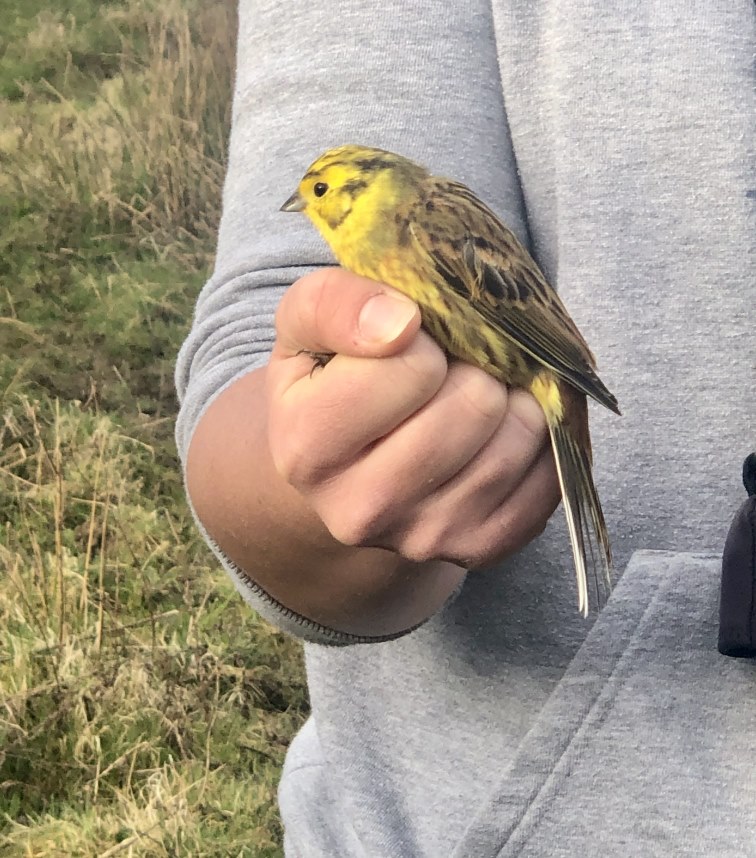
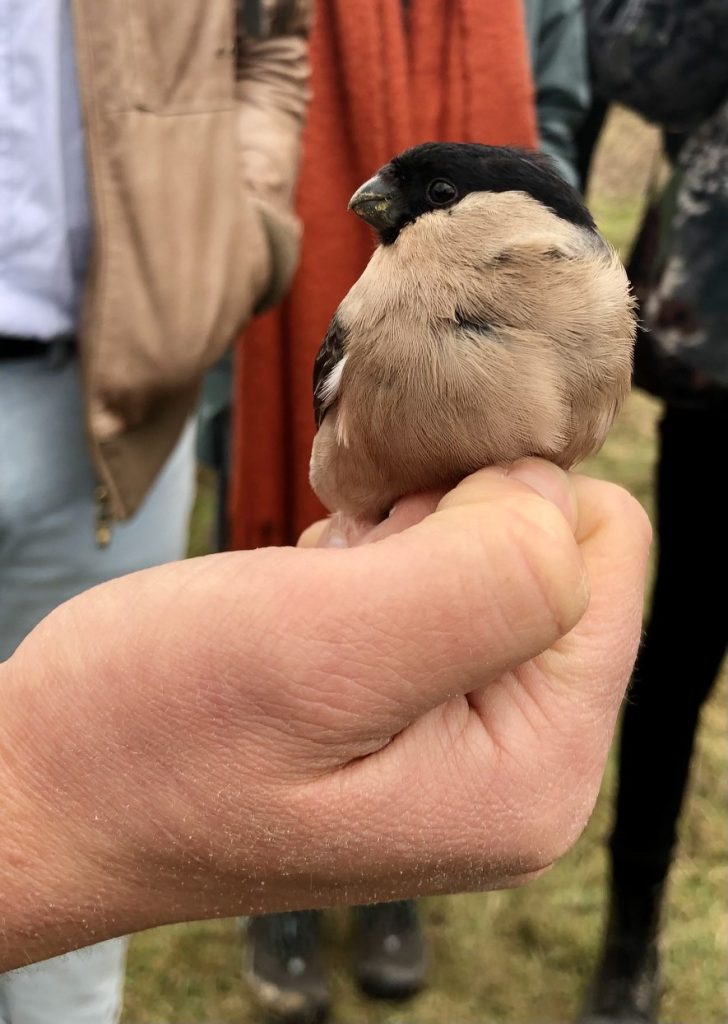
As part of the second year Applied Ecology and Conservation Field Course module, we visited a range of local wildlife sites, such as the British Wildlife Centre, Waterhall, Knepp Estate, Rye Nature Reserve, Blue Reef Hastings and the Hastings Fisherman’s Protection Society. The module very well attended and the students continued to build a diverse skill set. Along the way there were some interesting talks on ecological processes as well as surveys and management experiences. Opportunities for further involvement in the form of volunteering or final year projects have also arisen and these offer excellent opportunities for employment. One of the highlights was the Knepp bird ringing day were we had the opportunity to get close to some amazing birds thanks to Penny, Josie and Dave.

Continue reading “Ecology and Conservation second-year fieldwork”
A frog in the grass

Froglife workshop and fieldwork

In November students went along to Froglife’s ‘Discovering dew ponds: Amphibian habitat management training workshops’. These sessions were run by the wonderful Jennifer Hooper and William Johanson. Split into two sessions, the first covered amphibian ID and a habitat management theory session. This included sessions on how to identify many of the amphibian species native to the UK, such as the smooth newt, and their eggs. The students were also tasked with coming up with ideas on how to make example landscapes more amphibian-friendly.

The second session was more hands-on! Despite the heavy rain, the group worked on a pond in Stanmer Park that had been struggling to hold water. This was likely due to damage to the liner underneath, so a lot of stomping was done to compact the sediment beneath the liner to prevent any water from leaking into the sediment below. These workshops were really helpful to those studying or going on to study our final year ecological consultancy Ecological Impact Assessment module, as it gives an insight into what conditions amphibians need and what their habitats might look like.

Northern Ireland coastline across the water

Winners of our Northern Ireland field trip photo contest

As international travel was restricted this year due to COVID, in April our second year Geography and Environment students travelled to Northern Ireland for a week-long field trip. The aim of these longer residential field trips is to let students practice the field skills they’ve been learning under real-world conditions, and to support them in developing and undertaking their own research projects. But we also know that students spend field trips taking lots of photos to share with friends, family and social media – so this year we decided run a photo contest too!

There were three categories for the contest, each with a prize of a £50 National Book Token. Here are this year’s winning photos, plus some background info from the students who took them: Continue reading “Winners of our Northern Ireland field trip photo contest”

Group of people about to get on a boat

Inshore Fisheries and Conservation Authority boat trip

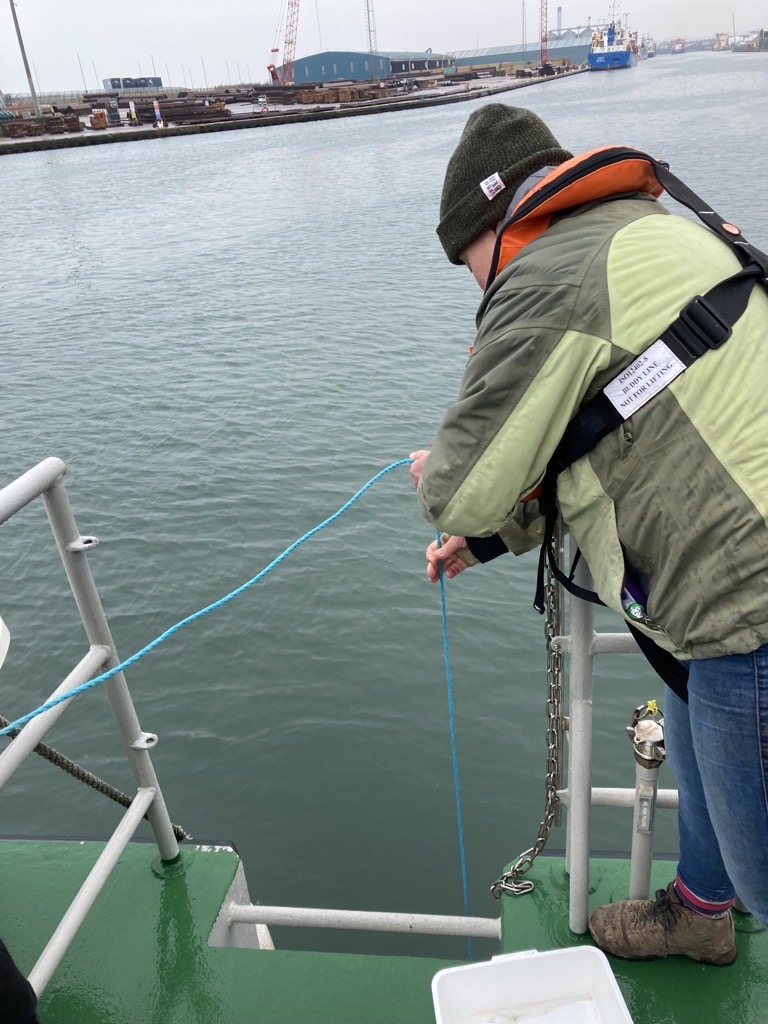
MRes Ecology and Conservation student Sarah George, really enjoyed the day spent on the Sussex IFCA boat (Inshore Fisheries and Conservation Authority), as part of the Ecotoxicology module.

“The boat trip with the IFCA was a real education and I’m so grateful for this opportunity.  I have not previously experienced aquatic sampling and just being able to be part of the process and see how things were done was fantastic – even down to the clear sequential labelling of samples and being able to visualise how large a sample actually was (much smaller than I’d thought).

Simple things like rinsing the filter with clean water rather than seawater make so much more sense when you’re there as you can visualise how this would alter the sample you’d just collected.  Setting up and operating the sediment grab is something you can only really appreciate by doing it, the idea is simple but actually getting it to work needs hands on experience.   Again, being able to see how the sediment varied from site to site and even from one side of the boat to the other, told a really strong story.

Continue reading “Inshore Fisheries and Conservation Authority boat trip”
students by the sea on beach

Investigating coastal change

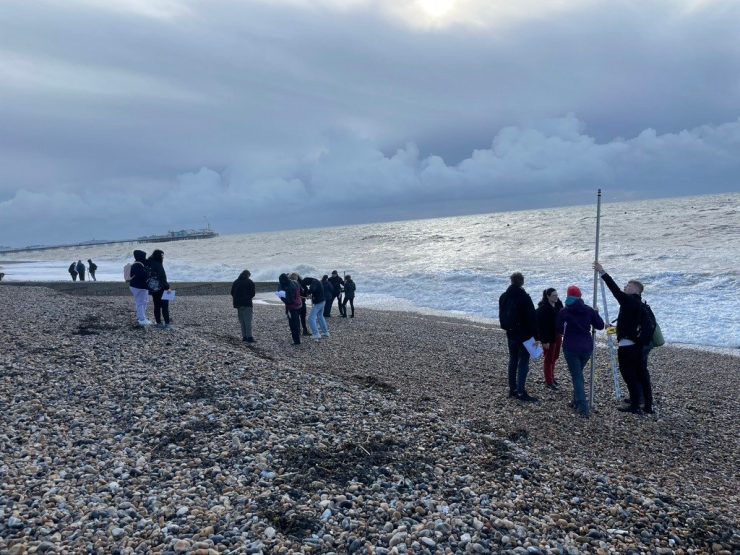
Fieldwork is at the heart of geography as a discipline. In early November, Level 4 students underwent an exciting field trip to investigate coastal change along the South Coast led by Dr. Georgios Maniatis and Magda Grove.

As part of the Academic Learning and Field Skills module, students created a series of beach profiles analysing grain size distribution along Brighton beach and the National Trust’s amazing Cuckmere Haven.

Continue reading “Investigating coastal change”